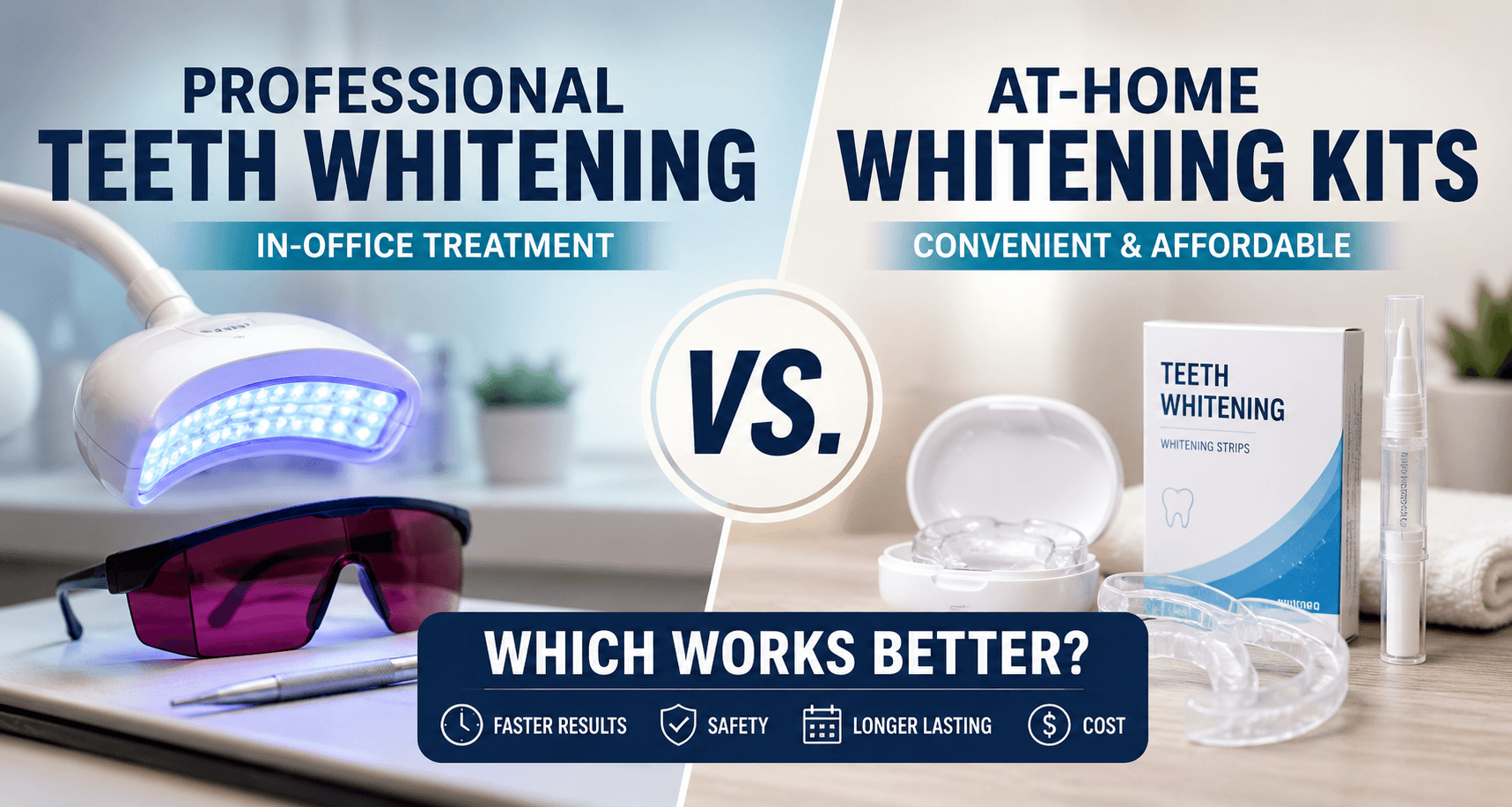
A BRIGHT SMILE has become one of the most requested cosmetic dental goals in recent years, and it's easy to understand why. Teeth whitening is one of the fastest ways to improve the appearance of your smile without invasive dental procedures. But once people start researching their options, one question comes up almost immediately:
Should you choose professional teeth whitening or use an at-home whitening kit?
The answer isn't always as straightforward as many marketing campaigns make it seem. While both options can whiten teeth, the results, safety, speed, and long-term effectiveness can vary dramatically depending on the method you choose.
In many cases, people are surprised to discover that some over-the-counter whitening products barely change the shade of their teeth after weeks of use. Others experience TOOTH SENSITIVITY or uneven whitening because they selected products without understanding how whitening ingredients actually work.
Professional whitening treatments, on the other hand, are designed to deliver faster and more predictable results under dental supervision. However, they also come with a higher price tag, which makes many consumers wonder whether the investment is truly worth it.
In this guide, we'll compare professional teeth whitening and at-home kits side by side, including effectiveness, cost, safety, longevity, and which option works best for different types of stains.
Understanding the Difference Between Professional and At-Home Whitening
At first glance, professional whitening and store-bought whitening kits may appear similar. Both use PEROXIDE-BASED BLEACHING AGENTS designed to break down stains and lighten the color of teeth. The major difference lies in the strength of the whitening agents, application methods, and level of supervision.
How Professional Teeth Whitening Works
Professional teeth whitening is performed or supervised by a dentist using HIGHLY CONCENTRATED WHITENING AGENTS. Most in-office treatments rely on hydrogen peroxide or carbamide peroxide in significantly stronger concentrations than what's available in over-the-counter products.
The process typically begins with:
- A dental examination
- Cleaning the teeth
- Protecting the gums
- Applying professional-grade whitening gel
- Using specialized lights or activation systems in some cases
One of the biggest advantages of professional whitening is customization. Dentists can adjust the treatment based on:
- Existing dental restorations
- Tooth sensitivity
- Type of discoloration
- Desired shade improvement
In many situations, patients notice DRAMATIC WHITENING after a single appointment. This is especially true for stains caused by coffee, tea, wine, or smoking.
A common misconception is that whitening lights alone create the results. In reality, the PEROXIDE CONCENTRATION plays the largest role. The light mainly accelerates the chemical reaction.
Another benefit of professional whitening is consistency. One thing dental professionals frequently observe is that professionally supervised treatments tend to whiten teeth more evenly than generic store-bought strips or trays.
How At-Home Whitening Kits Work
At-home whitening kits include:
- Whitening strips
- LED whitening kits
- Whitening trays
- Whitening pens
- Whitening toothpaste
These products use LOWER PEROXIDE CONCENTRATIONS for safety reasons. Since consumers apply them without dental supervision, manufacturers keep the formulas weaker to reduce the risk of irritation or enamel damage.
The main appeal of at-home kits is convenience. They are:
- Affordable
- Easy to purchase
- Widely available
- Simple to use at home
However, lower-strength formulas also mean slower and less dramatic results.
Many people expect over-the-counter whitening kits to deliver "HOLLYWOOD WHITE" TEETH within a few days, but realistic improvements usually require consistent use over several weeks.
Another issue frequently seen with store-bought kits is UNEVEN APPLICATION. Generic trays and strips may not fit every smile properly, causing patchy whitening in some areas.
LED whitening kits have also become extremely popular online, but in many cases, the LED light itself contributes far less to whitening than the peroxide gel included with the product.
Comparing Whitening Results
The biggest question for most consumers is simple:
Which whitening method actually works better?
In general, PROFESSIONAL WHITENING produces faster, stronger, and more predictable results. That said, some at-home kits can still provide noticeable improvements for mild staining.
Which Option Produces Faster Results?
Professional whitening is significantly faster.
Many in-office treatments can brighten teeth several shades in a single session lasting about 60–90 MINUTES. This makes professional whitening ideal for:
- Weddings
- Job interviews
- Photoshoots
- Special events
At-home kits, by comparison, often require:
- Daily use for 2–6 weeks
- Consistent maintenance
- Patience
One common frustration with store-bought products is inconsistent expectations. Some users assume all whitening systems perform similarly, only to discover that cheaper products may produce minimal results.
Professional systems also penetrate deeper into the enamel, allowing them to target stains more effectively.
Which Whitening Method Lasts Longer?
Professional whitening generally lasts longer because:
- Stronger peroxide formulas remove deeper stains
- Dentists provide maintenance guidance
- Treatments are more thorough
Results from professional whitening can last anywhere from 6 MONTHS TO 3 YEARS depending on:
- Diet
- Smoking habits
- Oral hygiene
- Coffee and wine consumption
At-home whitening kits usually fade faster because they primarily address surface stains.
That doesn't mean at-home kits are useless. In fact, many dentists recommend them as maintenance tools after professional whitening.
A combination approach often works best:
- Professional whitening for initial dramatic results
- At-home touch-ups for maintenance
Can At-Home Kits Achieve Professional Results?
Sometimes — but usually not completely.
High-quality whitening strips and dentist-supervised custom trays can noticeably improve tooth color over time. However, most over-the-counter kits cannot match:
- Professional peroxide strength
- Precision application
- Speed of results
- Shade consistency
Another important factor is STAIN TYPE.
Surface stains from coffee or tea often respond well to at-home whitening. DEEP INTRINSIC STAINS caused by aging, medication, or trauma are much harder to treat without professional intervention.
Safety and Side Effects
Does Teeth Whitening Damage Enamel?
When used properly, MOST WHITENING PRODUCTS are considered safe.
However, overuse can create problems.
Excessive whitening may contribute to:
- Tooth sensitivity
- Gum irritation
- Temporary enamel dehydration
One issue commonly seen with inexpensive whitening products is MISUSE. People often leave strips on longer than instructed or use treatments too frequently hoping for faster results.
Professional whitening minimizes these risks because the procedure is monitored by a dentist.
Which Option Causes Less Sensitivity?
Sensitivity varies from person to person, but professional whitening is often easier to manage because dentists can:
- Use desensitizing agents
- Adjust peroxide concentrations
- Customize treatment duration
Store-bought whitening kits can trigger sensitivity when:
- Trays don't fit correctly
- Gel contacts the gums
- Products are overused
People with NATURALLY SENSITIVE TEETH often achieve better experiences using dentist-supervised whitening programs rather than aggressive OTC kits.
Are LED Whitening Kits Safe?
Most LED whitening kits are relatively safe when used correctly, but consumers should understand their limitations.
The LED LIGHT ITSELF usually does not whiten teeth significantly. The whitening effect comes primarily from the peroxide gel.
Many online whitening systems market the LED component heavily even though the active ingredients do most of the work.
Consumers should also avoid UNREGULATED WHITENING PRODUCTS sold through questionable online marketplaces, especially those with unclear ingredient labels.
Cost Comparison: Is Professional Whitening Worth It?
Cost is often the deciding factor between professional whitening and at-home kits.
Average Cost of Professional Whitening
Professional whitening can range from:
- $300 TO $1,500 depending on the system used
Factors affecting price include:
- Geographic location
- Dentist expertise
- Whitening technology
- Number of sessions
Although the upfront cost is higher, many patients feel the faster and longer-lasting results justify the investment.
Hidden Costs of Cheap Whitening Kits
At-home kits appear inexpensive initially, but repeated purchases can add up over time.
Many consumers cycle through:
- Whitening strips
- LED kits
- Whitening toothpaste
- Whitening pens
without achieving the level of whitening they originally wanted.
In some situations, people end up spending HUNDREDS OF DOLLARS across multiple products before eventually choosing professional whitening anyway.
Who Should Choose Professional Whitening?
Professional whitening is usually best for:
- Moderate to severe staining
- Special events
- Deep discoloration
- Sensitive teeth
- Faster results
- Predictable whitening
People with crowns, veneers, fillings, or dental restorations also benefit from professional evaluation because RESTORATIONS DO NOT WHITEN like natural enamel.
Cases Where At-Home Kits May Be Enough
At-home kits may work well for:
- Mild yellowing
- Surface stains
- Whitening maintenance
- Budget-conscious users
They can also be useful for younger patients with relatively healthy enamel and minimal discoloration.
The key is maintaining REALISTIC EXPECTATIONS.
Why Some Teeth Don't Respond Well to Whitening
Not all discoloration responds equally to bleaching agents.
Intrinsic vs. Extrinsic Stains
Extrinsic stains occur on the enamel surface and are commonly caused by:
- Coffee
- Tea
- Red wine
- Tobacco
These usually respond well to whitening.
Intrinsic stains occur deeper within the tooth structure and may result from:
- Aging
- Trauma
- Certain medications
- Excess fluoride exposure
These stains are harder to remove and often require professional treatment or cosmetic alternatives like veneers.
Crowns, Veneers, and Dental Restorations
One of the biggest surprises for many patients is that whitening products do not affect:
- Crowns
- Veneers
- Bonding materials
- Fillings
This can create UNEVEN COLOR if surrounding natural teeth become whiter while restorations remain unchanged.
Professional consultation helps avoid these cosmetic mismatches.
Tips to Maintain Whitening Results Longer
No whitening treatment lasts forever. Maintenance habits matter significantly.
Foods and Drinks That Re-Stain Teeth
The biggest culprits include:
- Coffee
- Tea
- Red wine
- Soda
- Dark berries
- Tobacco products
Using a straw and rinsing with water after consuming staining beverages can help prolong results.
Dentist-Recommended Maintenance Habits
To maintain whiter teeth longer:
- Brush twice daily
- Floss consistently
- Use whitening toothpaste occasionally
- Schedule professional cleanings
- Avoid smoking
- Reduce acidic beverages
Many dental professionals also recommend occasional touch-up whitening treatments every few months.
Final Verdict: Which Teeth Whitening Option Works Better?
If your goal is:
- Faster whitening
- More dramatic results
- Longer-lasting brightness
- Safer supervision
- Better consistency
then PROFESSIONAL TEETH WHITENING is usually the better option.
However, at-home whitening kits still have value for:
- Mild staining
- Maintenance
- Budget-friendly whitening
- Convenience
For many people, the ideal solution is combining both approaches:
- Professional whitening for major improvement
- At-home maintenance for long-term upkeep
Ultimately, the best whitening method depends on your budget, sensitivity level, type of stains, and cosmetic expectations.
Frequently Asked Questions
How long does professional teeth whitening last?
Professional whitening can last from several months to a few years depending on oral hygiene, diet, and lifestyle habits.
Can whitening strips damage teeth?
Whitening strips are generally safe when used correctly, but excessive use may contribute to tooth sensitivity and gum irritation.
Is dentist whitening better for sensitive teeth?
In many cases, yes. Dentists can customize treatments and use desensitizing techniques that reduce discomfort.
What is the safest way to whiten teeth?
Dentist-supervised whitening is considered the safest option because treatments are customized and monitored professionally.