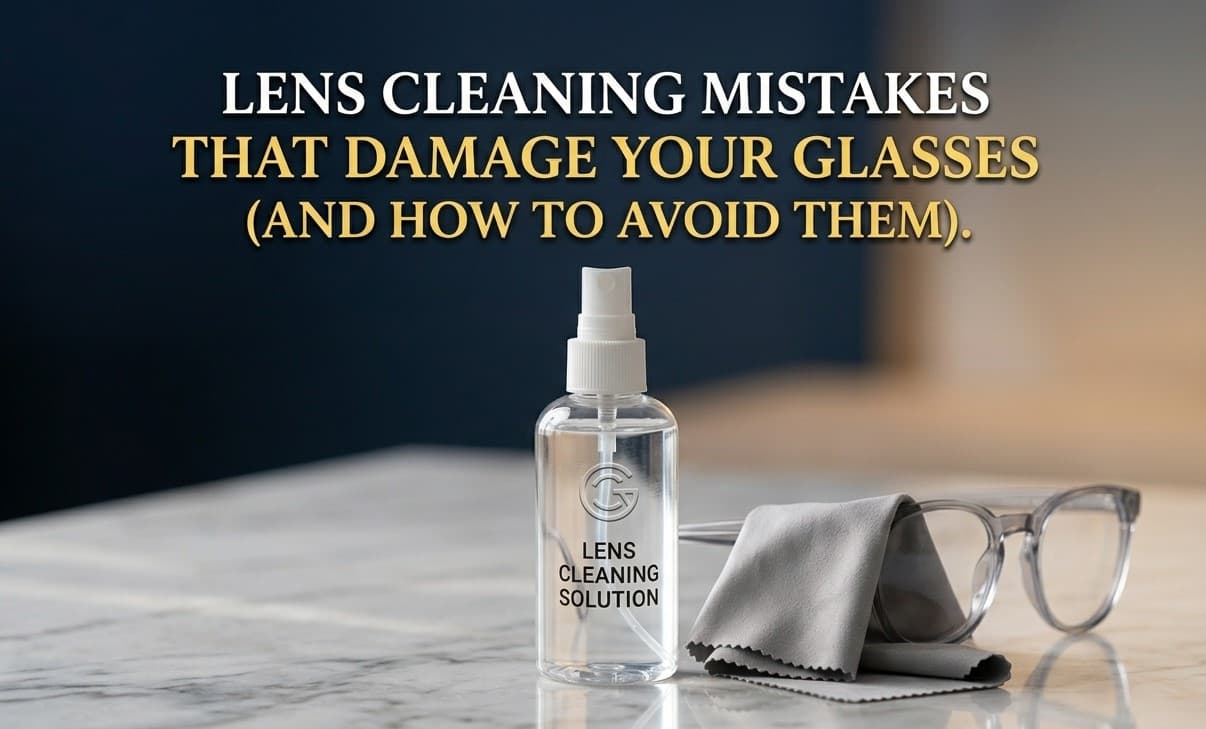
If you wear glasses every day, you probably clean them without thinking too much about it. I used to do the same, just a quick wipe with whatever I had nearby and done.
The problem? That quick clean might be slowly destroying your lenses. In fact, many of the most common cleaning habits actually cause permanent damage. I learned this the hard way after ruining more than one pair of glasses without even realizing it. Let's break down the biggest mistakes and how to avoid them.
Quick takeaway: A better cleaning routine protects both your vision clarity and your lens coatings.
Why Cleaning Your Glasses the Wrong Way Is Ruining Them
At first glance, cleaning glasses seems simple. If they look clear, they're clean right?
That's exactly what I thought for years. But over time, I started noticing a weird fog on my lenses that wouldn't go away, no matter how much I cleaned them.
What I didn't know is that lenses have delicate coatings, like anti-reflective layers, that can be damaged easily. Once they're scratched or degraded, there's no going back. And the worst part? Most damage happens slowly, through everyday habits.
Important: If coatings are damaged, you cannot polish them back to normal. Prevention is always cheaper than replacement.
The Most Common Lens Cleaning Mistakes
1) Using Your Shirt or Paper Towels
This is probably the most common mistake and the most damaging. I used to clean my glasses with my shirt all the time. It felt harmless. But fabrics and paper products contain tiny fibers that act like sandpaper.
In my case, I was basically scratching my lenses every single day without noticing, until the damage became permanent.
👉 Better alternative: Always use a clean microfiber cloth designed for lenses.
2) Cleaning Lenses Dry
Wiping your lenses without any liquid might seem convenient, but it's risky. Dust particles sit on the surface of your lenses. When you rub them dry, you're dragging those particles across the lens, causing micro-scratches.
This was another habit I had for years. It felt quick and effective, but it was silently ruining my vision clarity.
👉 Better alternative: Always use a cleaning spray or rinse with water first.
3) Using Hot Water
Hot water might seem like a good idea for removing grease, but it can damage lens coatings.
I made this mistake when trying to deep clean my glasses. Instead of helping, it ended up weakening the anti-reflective coating.
👉 Better alternative: Use lukewarm water only.
4) Using Harsh Soaps or Chemicals
Not all soaps are safe for glasses. I once used dish soap with strong fragrances, thinking it would clean better. Instead, it damaged the coating and made my lenses look permanently cloudy.
That clean feeling came at a cost.
👉 Better alternative: Use gentle, lotion-free soap or a lens-specific cleaner.
What Actually Happens When You Damage Your Lenses
Lens damage isn't always obvious at first.
It starts small:
- Tiny scratches
- Slight cloudiness
- Reduced clarity
Then it builds up. In my case, it got to the point where my lenses had a constant haze. I felt eye strain all the time because I was trying to see through the damage.
That's when the frustration really hit. And unfortunately, once coatings are damaged, they can't be repaired, you need new lenses.
Bottom line: Replacing lenses is often the only fix after coating damage.
Not sure if your current routine is damaging your lenses?
Get practical recommendations tailored to your lens type, coatings, and daily habits so you can prevent scratches before they become permanent.
How to Clean Your Glasses the Right Way (Step-by-Step)
After ruining multiple pairs, I finally learned the correct method and the difference is huge.
The Correct Cleaning Routine
- Rinse your glasses with lukewarm water.
- Apply a small amount of gentle soap (if needed).
- Rinse again thoroughly.
- Dry with a clean microfiber cloth.
What changed everything for me was never cleaning my lenses dry again. That one habit alone made a massive difference.
Golden rule: Never clean your lenses dry.
Products You Should Use
- Microfiber cloths (always clean)
- Lens cleaning spray
- Gentle, fragrance-free soap
I personally switched to a proper cleaning kit, and the results were immediate. My lenses stayed clearer, longer and without scratches.
How to Keep Your Glasses Like New for Longer
Cleaning is just one part of the equation.
Here are a few extra tips:
- Store glasses in a case when not in use.
- Avoid placing them lens-down on surfaces.
- Clean microfiber cloths regularly.
- Replace cloths when they get dirty.
I also upgraded to lenses with a more durable coating, and combined with proper care, they've stayed in perfect condition for months. That was never the case before.
Maintenance capsule: Good storage + proper cleaning = longer lens lifespan.
Final Thoughts: Cleaning Is Not Just Cleaning
If there's one thing I learned, it's this:
👉 Cleaning your glasses the wrong way doesn't just make them dirty, it slowly destroys them.
For a long time, I thought clean is clean. But after damaging multiple pairs, I realized that using the right method isn't optional, it's essential.
Taking care of your lenses means protecting your vision and your investment.
Final reminder: Better technique today prevents costly replacement tomorrow.
Ready to keep your glasses clear for longer?
Book a visit and let us help you choose the right cleaning products and care routine for your prescription lenses.
Frequently Asked Questions About Cleaning Glasses
Can you clean glasses with your shirt?
No. Fabric fibers can scratch your lenses over time.
Is dish soap safe for glasses?
Only if it is gentle and fragrance-free. Harsh soaps can damage coatings.
Why do my glasses look cloudy after cleaning?
This is often caused by coating damage or residue from improper cleaning products.
How often should you clean your glasses?
Daily, or whenever they get dirty, but always using proper techniques.