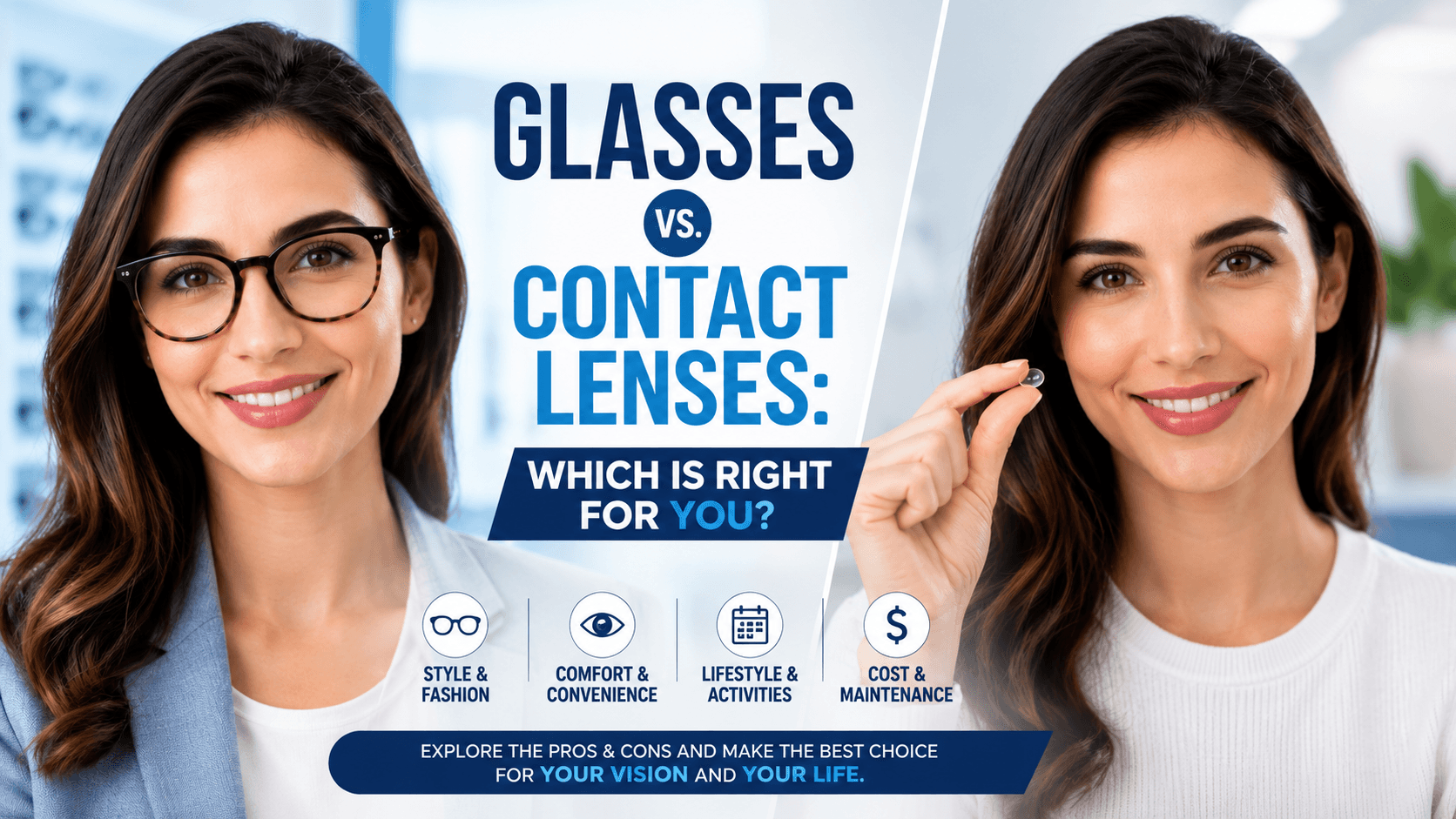
When it comes to correcting your vision, one of the most common questions is whether glasses or contact lenses are the better option. Both provide effective vision correction, but each comes with unique benefits and drawbacks that can significantly impact your daily life.
The right choice depends on several factors, including your lifestyle, comfort preferences, eye health, and budget. In this guide, we'll compare glasses and contact lenses in detail so you can determine which solution best fits your needs.
Key takeaway:
Neither option is universally better. The best choice depends on how you live, work, and care for your eyes every day.
Glasses vs. Contact Lenses: What's the Difference?
Glasses sit a short distance in front of your eyes and use prescription lenses to bend light correctly onto the retina. Contact lenses work similarly but are placed directly on the surface of the eye, creating a more natural visual experience.
Although both options can correct common vision problems such as nearsightedness, farsightedness, astigmatism, and presbyopia, the experience of wearing them can be very different.
Advantages of Glasses
Easy to Wear and Maintain
Glasses are incredibly simple to use. You put them on when needed and remove them when you're done. Unlike contact lenses, they don't require daily insertion, removal, or cleaning routines.
Lower Risk of Eye Infections
Because glasses never touch the surface of your eyes, they significantly reduce the risk of eye infections caused by improper handling or poor hygiene.
Cost-Effective in the Long Run
While premium frames can be expensive upfront, glasses often cost less over time because they don't require ongoing purchases of replacement lenses or cleaning solutions.
Eye Protection
Glasses provide an additional barrier against dust, wind, pollen, and other environmental irritants. Certain lens coatings can also reduce glare and filter blue light from digital screens.
Fashion and Personal Style
For many people, glasses are more than a vision correction tool—they're a fashion statement. Modern frames come in countless styles, allowing wearers to enhance their appearance while improving their vision.
Disadvantages of Glasses
Despite their convenience, glasses aren't perfect.
Limited Peripheral Vision
Frames can partially block side vision, which some people find distracting, especially while driving or participating in sports.
Weather Challenges
Rain, fog, humidity, and temperature changes can affect visibility by causing lenses to fog up or become covered with water droplets.
Physical Activity Limitations
Glasses may slip, bounce, or fall off during exercise, making them less practical for highly active lifestyles.
Advantages of Contact Lenses
Natural Field of Vision
Because contact lenses move with your eyes, they provide a wider and more natural field of view without frame interference.
Excellent for Sports and Active Lifestyles
Many athletes prefer contact lenses because they stay securely in place during physical activity. They won't fog up, slide down your nose, or interfere with helmets and protective eyewear.
Better Appearance Flexibility
Some people prefer the way they look without glasses. Contact lenses allow you to maintain your natural appearance while enjoying clear vision.
No Lens Reflections or Fogging
Contact lenses eliminate common issues associated with glasses, such as reflections, glare from lens surfaces, and fogging in changing temperatures.
Disadvantages of Contact Lenses
More Maintenance Required
Contact lenses demand proper cleaning, storage, and handling. Failing to follow recommended hygiene practices can lead to serious eye infections.
Dryness and Discomfort
Some users experience dry eyes, irritation, or discomfort, especially during long periods of screen use or in dry environments.
Ongoing Costs
Unlike glasses, contact lenses require regular replacement. Daily, bi-weekly, or monthly lenses generate recurring expenses throughout the year.
Learning Curve
New users often need time to become comfortable inserting and removing lenses. While most people adapt quickly, the process can initially feel intimidating.
Not sure whether glasses or contacts fit your routine?
A professional eye exam can clarify your prescription, eye health, and lifestyle needs so you choose vision correction with confidence.
Which Option Is Better for Different Lifestyles?
For Students and Office Workers
Both glasses and contacts can work well. However, individuals who spend long hours looking at screens may find glasses more comfortable because contact lenses can contribute to eye dryness.
For Athletes
Contact lenses are generally the preferred choice. They provide unrestricted vision and remain stable during movement.
For Frequent Travelers
Many travelers appreciate the convenience of contact lenses, particularly when wearing sunglasses. However, glasses remain a reliable backup option that doesn't require maintenance products.
For People with Sensitive Eyes
Glasses are often recommended for individuals who suffer from allergies, chronic dry eyes, or other eye conditions that make contact lens wear uncomfortable.
Can You Wear Both Glasses and Contact Lenses?
Absolutely.
Many eye care professionals recommend having both glasses and contact lenses. This approach gives you flexibility for different situations.
For example:
- Wear contacts during workouts and social events.
- Use glasses at home and while working on a computer.
- Keep glasses as a backup if your eyes become irritated or tired.
This combination allows you to enjoy the benefits of both options without being limited to one solution.
Factors to Consider Before Choosing
Before deciding between glasses and contact lenses, ask yourself:
- How active is my lifestyle?
- Am I comfortable touching my eyes daily?
- Do I have dry eyes or allergies?
- What is my long-term budget?
- Do I prefer convenience or maximum visual freedom?
Your answers can help guide you toward the best vision correction method.
Final Verdict: Glasses or Contact Lenses?
There is no universal winner in the glasses vs. contact lenses debate.
Glasses are easier to maintain, generally safer for eye health, and often more affordable over time. Contact lenses provide superior peripheral vision, greater freedom during physical activities, and a more natural visual experience.
For many people, the ideal solution isn't choosing one or the other—it's using both depending on the situation.
The best way to determine which option is right for you is to consult an eye care professional who can evaluate your vision needs, eye health, and lifestyle preferences.
Final reminder: The right vision correction plan is personal. A professional exam turns guesswork into a clear recommendation.
Frequently Asked Questions
Are contact lenses better than glasses?
Not necessarily. Contact lenses provide a wider field of vision and more freedom during activities, while glasses offer easier maintenance and lower infection risk.
Can I switch between glasses and contact lenses?
Yes. Many people regularly alternate between both options depending on comfort and daily activities.
Are contact lenses safe?
When used properly and maintained according to instructions, contact lenses are generally very safe.
Which is cheaper: glasses or contacts?
Glasses usually have lower long-term costs, while contact lenses involve recurring expenses for replacements and cleaning products.
Can contact lenses correct astigmatism?
Yes. Specialized toric contact lenses are designed to correct astigmatism effectively.